
Where It Started
The couple came to us with a clear picture of the wedding they wanted: 80 to 100 guests at a historic estate rather than a resort. They also had a maximum budget, and were clear that it would not move. Other planners had told them it would only cover an entry-level all-inclusive resort wedding. Our own assessment was the same.
However, we thought there might be another way. At the time we were developing a remote planning service, with budget and supplier management handled from a distance and no planner on site for the wedding. We had not yet run it for a client. We offered it to the couple as a pilot at a reduced fee.
The plan depended on three things, which we set out before they signed:
1. Their budget would only work if suppliers agreed to reduce their prices. We would ask our partner suppliers to do so, but we could not promise that any of them would.
2. A meaningful share of the work would be DIY, handled by the couple with help from friends and family.
3. No one from our team would be on site on the day.
The couple agreed, and we began planning.
The Venue Decision
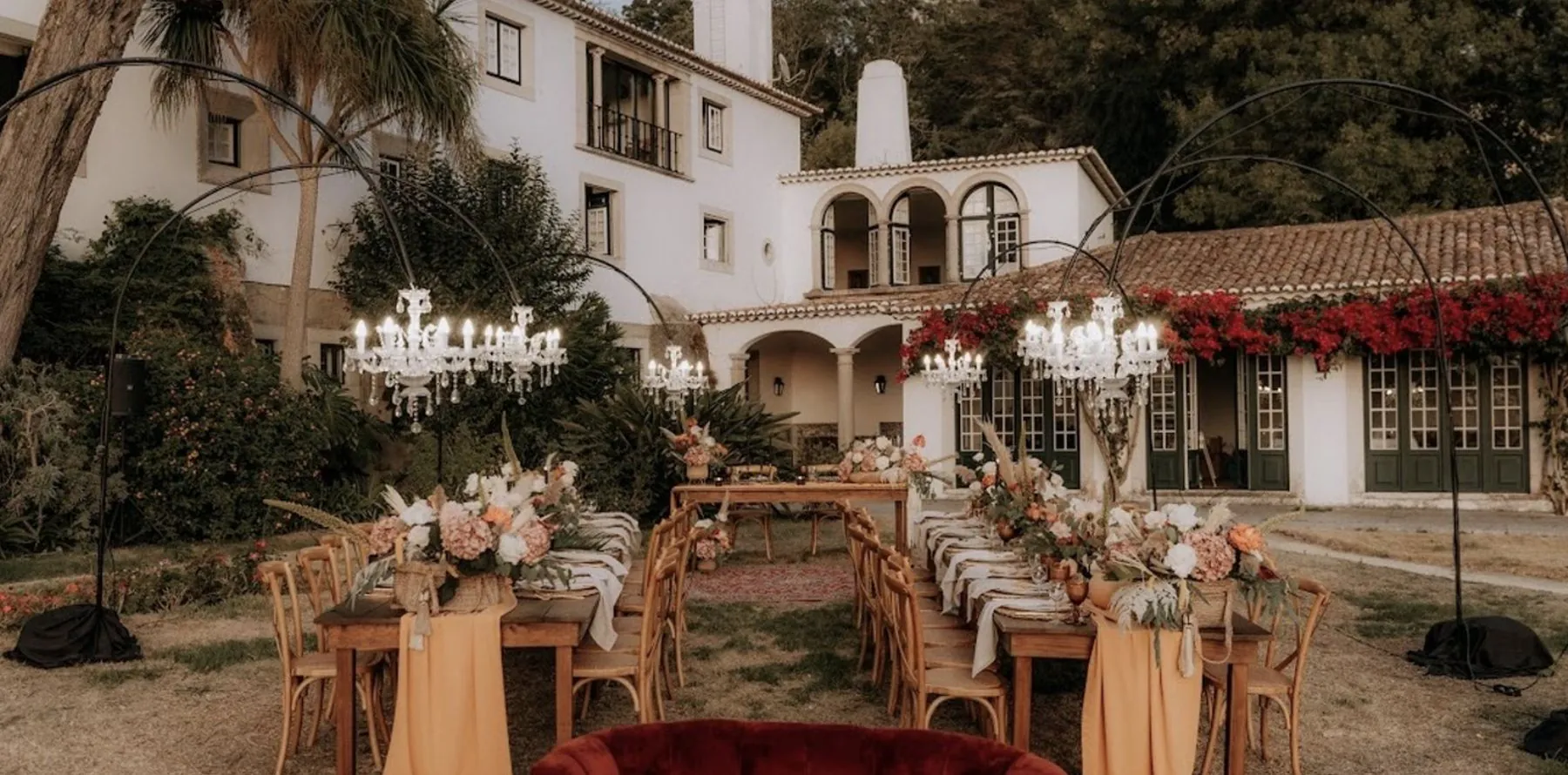
The couple chose an estate they loved. Before they booked it, we advised them that their budget would work far better at the low end of their guest list range, 80 guests. They told us bringing the list down would be hard. So before any deposit was paid, both sides knew the guest list, the budget and the venue did not fit together. We went on to plan for the larger number.
The decision
The estate’s contract required every wedding to use an exclusive supplier for furniture, flowers and decoration. That supplier had not quoted, and our budget carried a market rate placeholder.Commit now, or wait?
What the couple chose
They committed, with our market rate estimate as a placeholder in the budget.
In hindsight
We should have raised a much bigger red flag before the deposit. This required supplier often quoted above market rates, and its cost could not be put out to other suppliers later.
What happened
The supplier’s first quote was more than double our placeholder. The chairs and dinner tables alone came to more than the whole allowance.
What Happened Next
At that point there were three ways to close the gap: fewer guests, a larger budget, or negotiating supplier prices down. The couple kept the list at 100 and their budget fixed, so we focused on negotiation. How far to push it was our call.
It took 12 months from our first inquiry to the required supplier’s final quote. We went through its proposal line by line, asked for less expensive pieces, removed items and priced a smaller version. Against everything the supplier quoted, we brought its bill down by about 37% before tax. Some of what came out of it became work for the couple and the friends helping them. We also asked suppliers we have worked with for years to help, and several reduced their prices or added value as a favor to us.
The Final Month
Up to this point, the planning had gone largely well and the couple was pleased with how the wedding was taking shape. The final month is where the strain showed, and where the couple began to lose confidence in us. In the final month, we were in touch with the couple almost daily. When a planner left our team during the run-up, two senior members of our team each worked more than 50 hours a week on this wedding so the couple’s service would not drop. Much of that time went to work we chose to take on beyond the original plan: supporting DIY items the couple had expected to handle themselves, working through additional catering and bar-staff quotes, and confirming suppliers’ service hours. We said yes to each request without setting limits, because we wanted the wedding to come together. That was our decision, and it is a large part of why the budget reconciliation kept slipping.
Two weeks before the wedding, the hair and makeup artist the couple had booked directly, against our advice, canceled. We found a replacement from our network at short notice. The couple chose a different artist, so at their request we booked that artist and negotiated their travel fees over several rounds.
The wedding-day timeline followed the same pattern. We delivered it five weeks before the wedding. When the couple moved the ceremony two hours earlier a month out, and when their officiant’s ceremony grew to include a second language and repeated edits, we reworked it with every supplier each time. We had no formal or contractual cut-off for changes, so we kept accepting them, and the final version reached suppliers three days before the wedding.
What We Got Wrong
After a full review of our records, communications and processes, these are the places where we fell short.
The final budget took too long.
The couple first asked for a budget update in May. The final figure depended on the required supplier’s contract, which the couple signed in early August, pleased with the negotiated price, and we sent the remaining payments and due dates within days. The last piece, how much of their room-block deposit could be applied to supplier balances, meant reconciling every guest booking and took until mid-September: a month before final payments were due, but about two weeks after the couple asked about it.
Our RSVP and guest booking tools were not built for this group.
Most guests had non-US phone numbers our text messaging could not reach, some spoke only German, and many families needed multi-person RSVPs our system handled poorly. Our concierge stayed in touch over WhatsApp and edited nearly every family’s RSVP by hand, and it took several months to sort out which contact belonged to which household. Guests were well supported, but it was far more manual than it should have been.
Our agreement did not match the service.
It had been adapted from our full-service contract and still promised management of the whole budget, transparent costs, a wedding-day timeline and a proper handoff. It did not define where the couple’s DIY responsibilities ended, and it did not cover last minute changes. When DIY items proved harder than expected, we took them on without a clear way to scope or charge for the extra work. Our agreements now cover both.
The answer we should have given
From May to July, while the required supplier’s contract was still open, most of the budget was already settled. All other payments had amounts and dates visible to the couple, and one supplier had confirmed an installment. We could have sent a short, dated note listing what was signed, paid and due, with the open line marked “still being negotiated, last quote attached.” An incomplete budget, clearly labeled, would have served the couple better than waiting.
How We Work Now
| What went wrong | What we built | What it means for you |
|---|---|---|
| Budgets relied on placeholders, with no single agreed version | Up to ten itineraries, with full budgets for your top three priced at your guest count before you sign. You approve a target budget line by line and track it against actual spend | You compare complete budgets and work from one agreed version, with every change recorded |
| Only one guest count was priced before booking | Budgets you can reprice at any guest count, line by line | You see what each guest count really costs before you commit |
| Manual budget updates depended on one busy person | A payment tracker showing every payment, who pays it, whether it is paid and when it is due, plus automatic reminders. Every question goes to a named concierge with a 48-hour reply window | You always know what is paid, what is due and who is answering |
| DIY responsibilities were not clearly defined | A clear split of what we handle and what you handle, plus set pricing for on-site assistant support with DIY items and personal needs | You know what is yours, what is ours and what extra help costs |
| Late changes had no limits | A ceremony guide for friends or family who officiate, and a set change deadline, after which a late-change fee applies | Your ceremony runs to time, and you know the cost of a late change before you make it |
| Our agreement did not clearly cover couple-booked suppliers | Clear terms in our agreement on supplier responsibility. We recommend, coordinate and advocate with every supplier on your wedding, but we do not guarantee any supplier’s performance | You know where responsibility sits before you book. Suppliers we have worked with before are ones we can vouch for, and those relationships make problems easier to solve |
| Our RSVP tools did not support multi-person RSVPs, and our text messages did not reach international phone numbers | A streamlined guest RSVP and booking flow. Guests RSVP for themselves and everyone in their party, and can edit their RSVPs until the deadline. Text messaging now reaches mobile numbers internationally | Your guests can respond for their whole party in one step, wherever they live, and you can track everyone’s attendance |
Two other changes go beyond our tools:
We no longer take on a wedding unless the budget realistically covers the plan, even as a pilot. If the guest list, venue and budget do not fit together, we do not move forward until the plan changes so that they do. The remote service itself proved viable and, with these changes built in, is now our ENHANCED service.
How we are paid, including commissions, is set out in full in every service agreement. Every agreement lists our fee and any commissions up front, so a couple can see exactly how a change in guest count or budget affects what we are paid.
How It Ended
The wedding went ahead in full, with the 100-person guest list the couple wanted, at well below market rates. Guests and suppliers told us it was a wonderful day, and people were still dancing into the early morning hours. We delivered what we had promised for the day itself, at a loss. We were too slow to finalize their budget, and we are sorry for the stress that caused.
Every planner has a wedding that tests their process. If you’re hiring a planner, ask them about theirs, and what they changed as a result.
What to Know Before You Pay a Venue Deposit
Whoever you plan with, some items are worth settling before any money changes hands.
Some venues require you to use their suppliers. Ask the venue which suppliers, if any, you are required to use, for example for catering, flowers or furniture. You will not be able to compare prices or switch to someone else later.
Get the required suppliers’ prices before you commit. Ask for a quote, or at least a written range, based on your real guest count.
Guest count changes everything. Price the wedding at two different counts and compare them line by line before you decide.
If the numbers do not fit, decide now. Your options are fewer guests, a different venue or a bigger budget, and who would fund the difference. Hoping a supplier will lower a price it has already declined is not a plan.
Know how you will track the budget. Ask your planner how often you will get an updated budget, and what it will show.
Your planner’s time is part of your budget. Before asking for another round of negotiation, ask what it could realistically save and what it will take attention away from.